Give the reader the answer first
Start with a short project summary: what the work was for, what you contributed and what the final output was. A viewer should not need to scroll through research images to discover whether you designed the entire product or one part of it.
Adobe’s case-study guidance emphasizes a clear story and visible results. Use that as a prompt to select evidence, not as permission to manufacture a business result. If the project has no measured outcome, explain what was delivered and what remains untested.
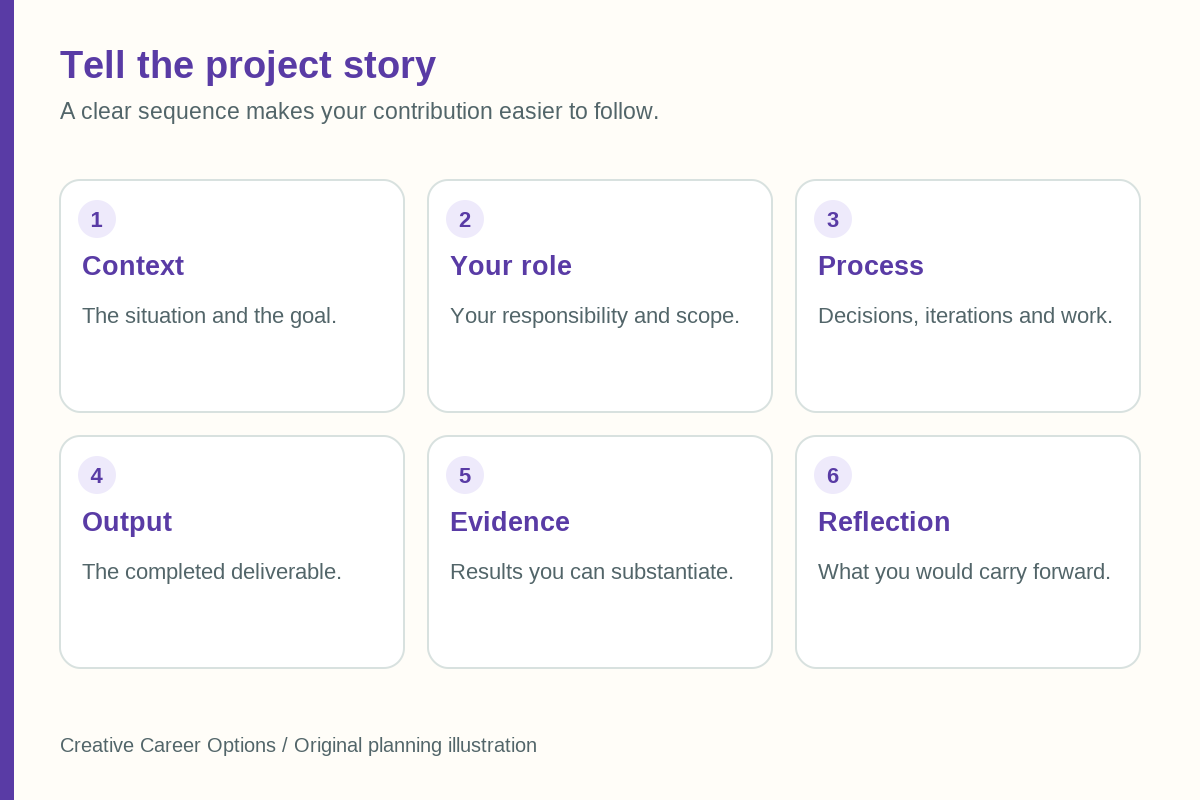
Use a six-part case-study structure
- Context: the audience, setting and practical problem.
- Role: the work you owned, collaborators and relevant constraints.
- Decision: one or two choices that materially affected the result.
- Evidence: sketches, prototypes, tests or comparisons that support those choices.
- Outcome: the delivered work and any results you can verify.
- Reflection: what you would change, or what still needs to be learned.
Turn process material into an explanation
A wall of screenshots does not explain a decision. Pick a before-and-after pair or two alternatives and annotate the difference. For each image, finish the sentence “This matters because…” If there is no useful answer, move the image to the working archive.
Illustrative example: a self-directed poster project explores whether a large date or a large image makes the event easier to identify. The case study can show both layouts and explain the tradeoff. It cannot claim increased ticket sales because no event ran.
Separate results from interpretation
Label measured results with their source, date and scope. Describe your own observations as observations. Where other people contributed, make their work and your part clear. Avoid suggesting that one design change caused a business result when several things changed at once.
End with the final artifact at a readable size and a short lesson. The reader should leave understanding a specific piece of work, not merely knowing that a process took place.
Case-study drafting sheet
| Section | Write this | Evidence check |
|---|---|---|
| Context | The audience needed… | What establishes this need? |
| Role | I was responsible for… | What did collaborators do? |
| Decision | I chose X because… | Which artifact demonstrates the tradeoff? |
| Outcome | The delivered result was… | Measured, observed or still untested? |
| Reflection | Next I would test… | What uncertainty remains? |
Put the plan to work
Use your own information to make a practical next step.
Open the planning worksheetSources and review
These sources support the factual details in this guide. Policies, prices and services can change; check the official source before acting.
- Adobe: presenting a case studyChecked 2026-11-24
An original planning resource. Sources identify the factual references used; examples and worksheets are our own.
How these guides are prepared